
About the project
Knowledge networks in nineteenth-century Africa:
A digital humanities approach to colonial encounters and local knowledge in Portuguese expedition narratives (1853-1888)
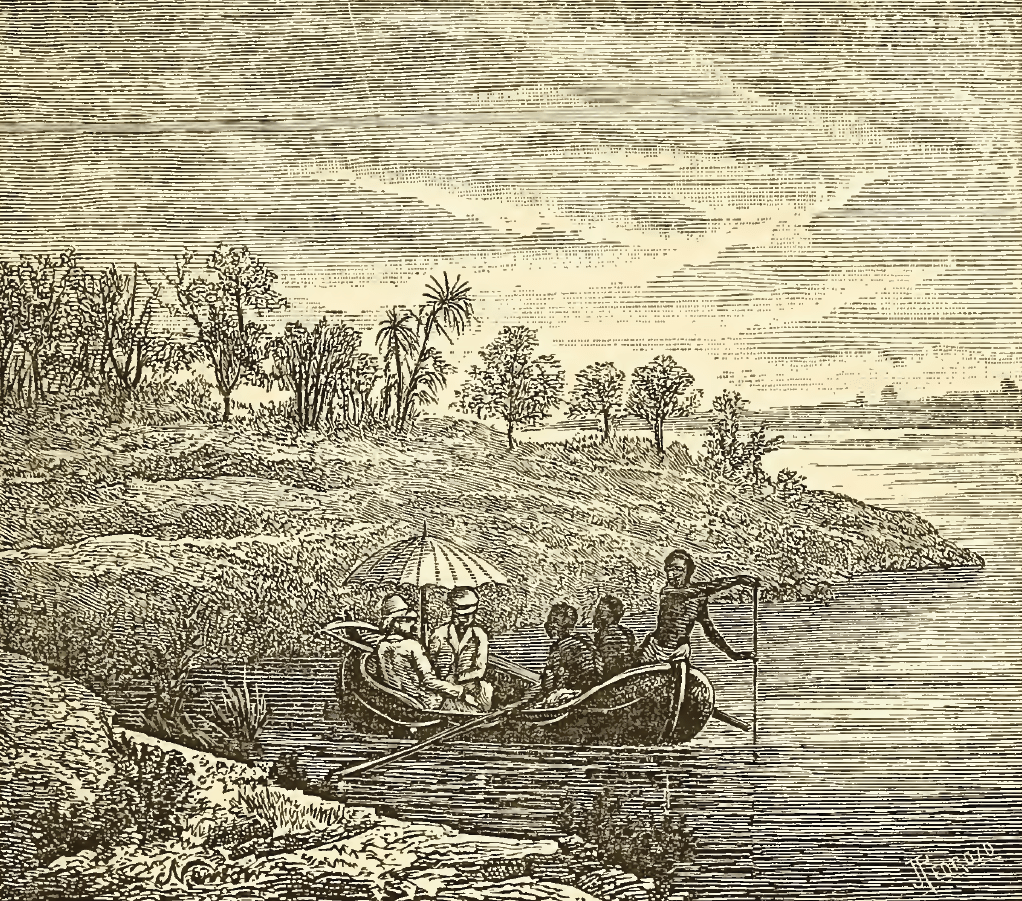
It is easy to think of nineteenth-century Africa as a colonial space contested by European powers with their political, economic, and scientific agendas. Furthermore, the historiography of events such as the Scramble for Africa sometimes reinforces the idea of a powerless continent partitioned by imperial states. If, on the one hand, we cannot deny the force and arbitrariness of colonial violence, on the other hand, History has long disregarded the ways in which African peoples resisted. This eurocentric bias is noticeable in the History of Sciences, which has frequently associated scientific expeditions in Africa with an idealized image that highlights ideals of courage, adventure, and pioneering spirit. Even today, it is possible to find the results achieved by naturalists described as discoveries made by extraordinary individuals. Only recently has academic research begun to distance itself from this understanding by re-evaluating the narratives written by travellers and realising that the science practised in the field in the nineteenth century was deeply collaborative. In the field, naturalists depended on networks of individuals who contributed through activities such as river navigation, moving through forests, searching for shelter, communicating with the local population, and the scientific work of collecting, identifying, and preparing specimens.
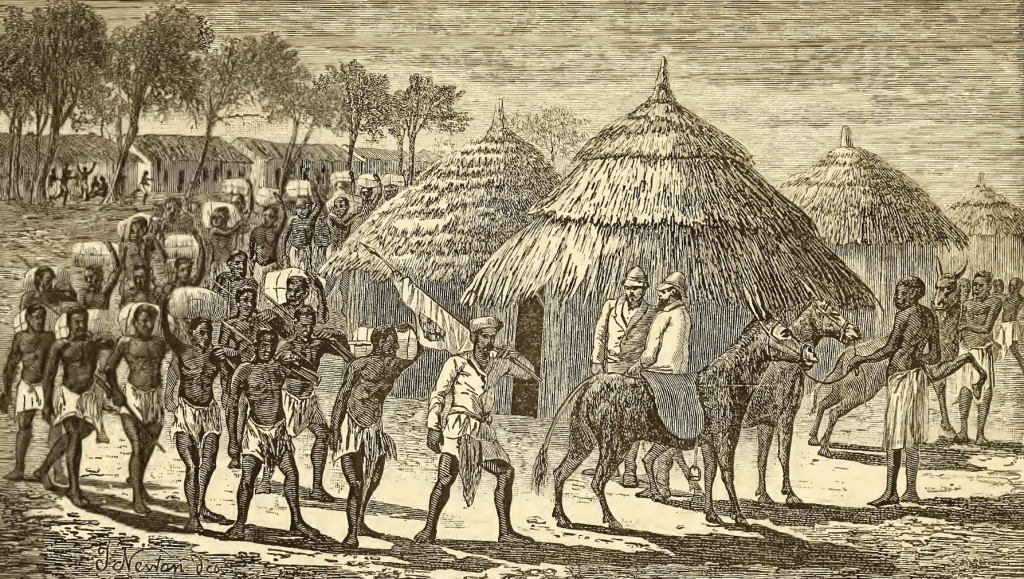
CAPELLO, H.; IVENS, R. De Benguella às Terras de Iácca. v. 1. Lisbon: Imprensa Nacional, 1881, p. 19.
CAPELLO, H.; IVENS, R. De Benguella às Terras de Iácca. v. 1. Lisbon: Imprensa Nacional, 1881, p. 19.
In this research, we will analyse four Portuguese expeditions to Africa focusing on the sociability of fieldwork to reveal how native groups assisted the travellers, especially in specimen collection. When investigate how local agents contributed to the success achieved by travellers, we intend to reveal that, despite social asymmetries in the colonial space, native groups actively participated in the European process of knowing African nature. With this, we will demystify the idea of the heroic, solitary traveller by placing naturalists within broader social and historical processes, investigating how knowledge circulated between empire and colony, understanding how social relations were formed in the field and at what moments travellers depended on the support of local networks. Furthermore, we also intend to shed light on the collection-building processes and reflect on the role of these local agents in the formation of European scientific heritage.
We have selected the expeditions of F. Welwitsch (1853-1860), H. Capelo and R. Ivens (1877-1880 and 1884-1885) and H. Carvalho (1884-1888), official journeys financed by the Portuguese government with the aim of exploring the natural landscape of the African continent. They were thus imbued with ideas of colonisation and formed part of the structure that defined European attitudes towards Africa. Another convergence between these travellers is that they visited some of the same regions in Angola within a few years of each other, which means they possibly came into contact with some of the same local inhabitants. In this case, it will be possible to identify local agents who constituted permanent points of support for the Europeans in Angola, as well as to reflect on the qualities that made them frequent collaborators in scientific expeditions. We will analyse the accounts written by the naturalists, as well as correspondence and articles published in newspapers contemporaneous with the expeditions. We will employ computational tools, such as network visualisation programs and georeferenced map-making software, to explore how these methodologies can be used as part of historical research and the public communication of the results achieved.
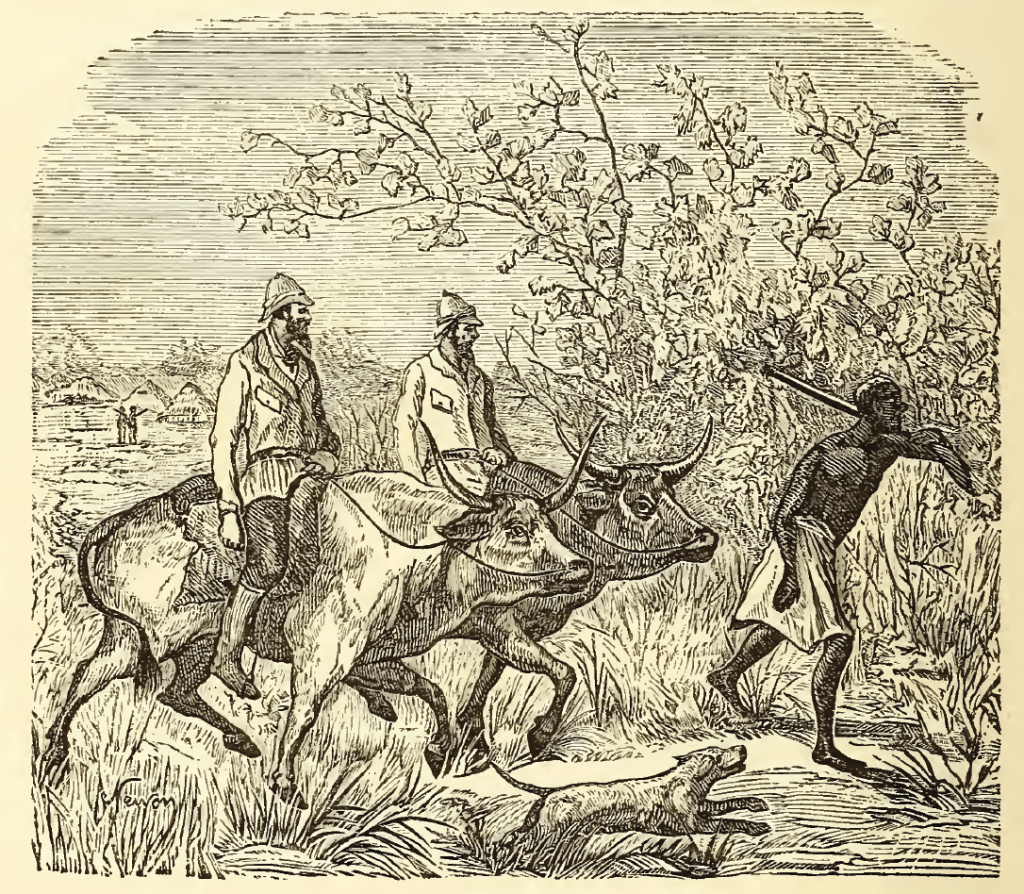
One of the expected products in this research is a online platform where we will provide the academic and non-specialised public with information, maps that digitally recreate the itineraries of the expeditions, social network graphs representing the interactions between travellers and local agents, a virtual exhibition of the illustrations originally published in the travel books and currently in the public domain, and an interactive chronology placing the expeditions within the context of the history of Portugal and Angola. As we believe these results can contribute to the reassessment of the participation of local agents in scientific expeditions and to a greater understanding of nineteenth-century science, we intend to bring these considerations to young audiences when planning a workshop to discuss the topic in schools using a decolonial perspective on the History of Science. To make this research possible, we rely on a multidisciplinary team with experience in the History of Science, Museology, Science Communication, Digital Humanities and Biological Sciences.